Introduction: What Is a Robot Dealer and Why Does It Matter?
Businesses across restaurants, hotels, warehouses, and factories are racing to adopt robotics—yet most stumble on the same three questions: where to source one, how to deploy it correctly, and who handles support when something breaks down.
Robot dealers exist to answer all three. Unlike purchasing through Amazon or Alibaba, a specialized dealer guides businesses through selection, installation, staff training, and ongoing operation—connecting manufacturers to real-world environments where the robots actually have to perform.
This guide covers what robot dealers do, why they're often better than buying direct, what acquisition options exist (buy, rent, or lease), and how to choose the right dealer for your operation.
Key Takeaways
- Robot dealers handle the full process: selection, deployment, training, and ongoing support
- Dealers bring industry expertise that prevents costly mismatches between robots and operational needs
- Flexible acquisition options (buy, rent, lease) make robotics accessible to businesses of all sizes
- Reputable dealers serve multiple industries and carry a range of robot types
- Support quality and deployment expertise matter more than price alone
What Does a Robot Dealer Actually Do?
A robot dealer is a business that sources, sells, and deploys robotic solutions—acting as a bridge between manufacturers and end users. That's a different model entirely from buying through Amazon or eBay, where you get the hardware and nothing else—no customization, no deployment help, no support.
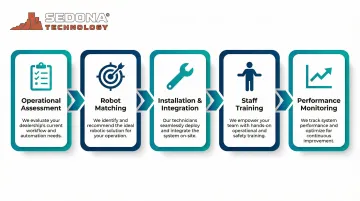
Core services dealers provide beyond the product:
- Assess your operational environment and identify where automation fits
- Match the right robot model to your workflow, space, and staffing setup
- Handle on-site installation and integration with existing systems
- Train your team so they're confident operating the robot from day one
- Monitor performance after deployment and advise on upgrades as your needs evolve
Dealers work closely with clients to understand whether they're outfitting a restaurant kitchen, hotel lobby, warehouse floor, or production line—then recommend accordingly. Unlike single-brand retailers, quality dealers carry multiple robot types and models across categories: service robots, delivery bots, industrial arms, and cleaning robots.
A good dealer doesn't disappear after the sale. That ongoing relationship—someone who knows your setup and can respond when something changes—is often what determines whether a robotics investment actually sticks.
Why Work With a Robot Dealer Instead of Buying Direct or Online?
Buying a robot online is tempting—but it's also risky. You receive hardware with no guidance on compatibility, workflow integration, or setup. 92% of manufacturers view automation as critical for competitiveness, yet only 37% have achieved significant deployment. The primary barriers? 50% struggle to identify the right technology, and 39% lack internal expertise.
Working with a dealer closes these gaps in four concrete ways:
- Wrong fit: A robot that technically works but doesn't match your environment, staffing model, or throughput is a waste of money. Dealers assess your specific operation before recommending anything.
- Faster deployment: A properly scoped installation skips weeks of trial-and-error. Staff get trained, workflows get adjusted, and the robot starts producing results sooner.
- Ongoing accountability: Online retailers disappear after checkout. Dealers with support contracts remain reachable—and have a stake in whether the robot actually performs.
- Avoiding the "robot in the corner": Most failed robotic installations aren't mechanical failures—they result from poor process integration, changing environments, and inadequate staff retraining. Expert guidance keeps expensive hardware from gathering dust.
Types of Robots Robot Dealers Typically Offer
Robot dealers typically cover four main categories — and the best ones let you source across all of them from a single vendor.
Major robot categories dealers serve:
- Hospitality & service robots: Delivery bots, room service robots, and concierge units for hotels, restaurants, and senior living facilities — handling food delivery, table bussing, and guest interaction
- Cleaning and sanitation robots: Autonomous floor scrubbers and vacuums for malls, airports, offices, and retail spaces
- Industrial transport robots: AMRs (Autonomous Mobile Robots) for warehouses, factories, and production lines, managing material transport, picking, and sorting
The same dealer often covers both a retail floor and a warehouse floor — which simplifies vendor management for businesses running operations across multiple environments.
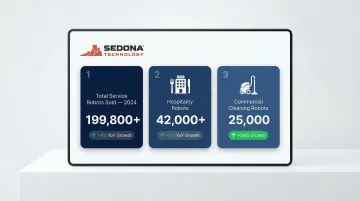
Professional service robot sales hit nearly 200,000 units in 2024, up 9% year-over-year. Hospitality robots accounted for over 42,000 of those units, while commercial cleaning robots surged 34% to 25,000 units — driven by labor shortages and rising operational costs.
Acquisition Options: Buy, Rent, or Lease Through a Dealer
Most robot dealers offer three acquisition models — outright purchase, rental, and leasing — giving buyers options that fit different budgets, timelines, and risk tolerances.
Outright Purchase
Best for: Businesses with clear, long-term robotics needs and available capital.
Purchasing means you own the asset outright. Expect to budget for hardware, installation, training, and ongoing maintenance. Total Cost of Ownership (TCO) includes not just the robot, but also software licenses, facility modifications, and operational expenses. Hidden costs like integration downtime and facility modifications can erode expected ROI by up to 40% over three years if not properly planned.
Rental
Best for: Businesses testing automation, handling seasonal spikes, or trialing before committing.
Rental offers the lowest barrier to entry. Some dealers offer minimum rental periods as short as 2 months, making this an accessible entry point for small businesses. For example, Sedona Technology offers flexible rental options starting at just 2 months, with free installation, training, and ongoing support included, giving businesses a concrete way to validate automation before any long-term commitment.
Leasing
Best for: Businesses wanting to preserve capital while locking in a robot for the medium-to-long term.
Leasing typically means fixed monthly payments over 36–48 months, usually arranged through a financing partner. Unlike renting, leasing is a longer commitment but may offer purchase options at the end of the term.
Comparison Table
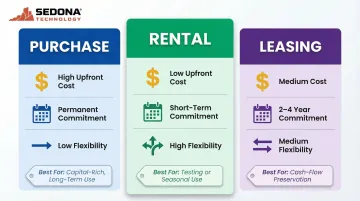
| Acquisition Model | Upfront Cost | Flexibility | Commitment | Ideal Use Case |
|---|---|---|---|---|
| Purchase | High | Low | Permanent | Long-term, high-utilization needs with available capital |
| Rental | Low | High | Short-term | Testing automation, seasonal demand, proof-of-concept |
| Leasing | Medium | Medium | Medium-to-long | Preserving cash flow while securing robot for 2–4 years |
These models reflect a broader shift from CapEx to OpEx in robotics adoption. The global RaaS fleet grew 31% in 2024 to over 24,500 units, and 20% of SMEs adopting robotics now use leasing or RaaS, trading high upfront costs for predictable monthly payments.
What to Look for When Choosing a Robot Dealer
Not all dealers are created equal. Focus on these four criteria:
1. Industry Expertise
Does the dealer understand your specific operating environment? The integration needs of a commercial kitchen differ vastly from a warehouse. Look for dealers with proven deployment experience in your vertical, including case studies and references.
2. Support Quality
Do they include installation, training, and ongoing support—or charge extra? A robot that goes down without responsive support can cost more in downtime than it saves in labor. Prioritize dealers that include comprehensive Service Level Agreements (SLAs) as standard, not as expensive add-ons.
3. Acquisition Flexibility
Can they offer the right option for your budget and stage? The best dealers provide purchase, rental, and leasing options, allowing you to scale dynamically during peak seasons without being locked into underutilized assets.
4. Product Range
Do they carry robots suitable for your use case, or do they push one-size-fits-all solutions? Quality dealers carry multiple brands and models across categories, ensuring they can match the right robot to your needs rather than forcing you into a predetermined choice.
Support deserves particular attention here. The vast majority of failed robotic installations stem from poor process integration and lack of staff retraining—not mechanical failures. Without proactive support and change management, even well-specified hardware ends up as a "robot in the corner."
Sedona Technology is one example of a dealer built around these criteria. They serve restaurants, hotels, warehouses, factories, retail spaces, malls, and airports—with flexible sales, rental (minimum 2 months), and leasing options. Free installation, training, and ongoing support come standard with every solution. Reach their team at +1 602-687-3253, Monday through Friday, 8AM–5PM.
Frequently Asked Questions
What exactly is a robot dealer?
A robot dealer is a specialized provider who sells, rents, or leases robotic solutions to businesses, offering services like installation, training, and ongoing support—going well beyond what an online marketplace or general retailer provides.
What industries benefit most from working with a robot dealer?
Key industries include restaurants, hotels, retail, malls, airports, warehouses, factories, and production lines. Any business with repetitive tasks, labor cost pressures, or customer experience goals can benefit from dealer-guided robotics deployment.
Is it better to rent or buy robots through a dealer?
Renting suits businesses testing automation or managing seasonal demand, while buying is better for long-term, high-utilization needs. A good dealer can assess your specific situation and recommend the option that fits your budget, timeline, and operational goals.
What support should a robot dealer provide beyond the hardware?
A quality dealer should include installation, staff training, and ongoing technical support—ideally at no extra cost—so your business can operate the robot confidently and maintain consistent performance without relying on outside help.
How much does it cost to get a robot through a dealer?
Costs vary widely by robot type, industry, and acquisition method. Rental options typically range from $300–$800/month for food service robots, $500–$2,000 for cleaning robots, and $1,500–$4,000 for warehouse AMRs. Contact a dealer directly for a quote based on your specific setup.
Can small businesses and independent restaurants or hotels afford robots through a dealer?
Yes. Rental and leasing options make robotics accessible for smaller operations. Some dealers offer rental periods as short as 2 months with full support included, keeping upfront costs low and financial risk minimal.