This guide covers the top hotel delivery robot suppliers, the features that matter most, what it costs, and how to choose the right fit for your property.
TLDR:
- Hotel delivery robots reduce labor costs by 20-40% while improving delivery speed and guest satisfaction
- Leading suppliers include Relay Robotics, Keenon, Pudu, LG CLOi, and Aethon, each with distinct strengths
- Purchase prices range from $15,000-$40,000; rental models start around $300-$800/month
- Key features include LiDAR navigation, elevator integration, appropriate payload capacity, and PMS connectivity
- Successful deployment requires matching robot capability to property type, evaluating supplier track record, and considering flexible acquisition options
What Are Hotel Delivery Robots and Why Are Hotels Investing in Them?
Hotel delivery robots are autonomous wheeled robots designed to navigate hotel corridors and elevators to deliver items like towels, toiletries, food, and amenities to guest rooms with little to no human involvement.
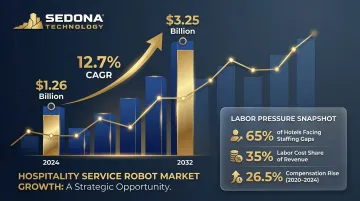
According to the American Hotel & Lodging Association, 65% of hotels still report staffing gaps — most acutely in housekeeping (38%) and front desk roles (26%). Labor is the largest expense line, comprising approximately 35% of total hotel operating costs, and total compensation for hospitality workers rose 26.5% between 2020 and 2024, squeezing already-thin margins.
Delivery robots address this pressure head-on. They handle repetitive transport tasks without overtime costs, operate 24/7, and free staff to focus on higher-touch guest interactions. The global hospitality service robot market was valued at $1.26 billion in 2024 and is projected to reach $3.25 billion by 2032, growing at a CAGR of 12.7%.
Applications extend beyond simple delivery:
- Room service delivery for meals, beverages, and third-party food orders
- Amenity drop-offs including towels, toiletries, and bottled water
- In-room dining tray transport
- Bulk linen and supply transport for housekeeping
- Concierge support with welcome packages and VIP items
That cross-department utility is what drives adoption — one robot can log dozens of deliveries per shift across housekeeping, F&B, and front desk operations.
Top Hotel Delivery Robot Suppliers
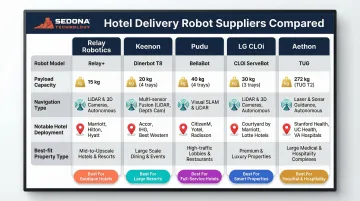
Relay Robotics (Relay, Relay2)
Relay Robotics (formerly Savioke) has accumulated more confirmed hotel deployments in North America than any other supplier on this list. Marriott, Hilton, and Holiday Inn Express are among the major chains running Relay robots across their properties.
The Relay2 model key specs:
- Payload: 10-gallon (41-liter) capacity — double the original Relay
- Navigation: LiDAR + camera-based autonomous routing
- Guest interface: 8-inch touchscreen
- Elevator integration: Proprietary cloud-based system compatible with OTIS, Schindler, TK, Mitsubishi, and KONE — no hardware modifications required
Keenon Robotics (W3, T10)
Keenon is a Chinese-origin supplier with confirmed global deployments across hospitality brands. Two models are purpose-built for hotels:
- W3 "Butlerbot": Multi-floor hotel delivery, 20 kg payload, 70 cm minimum corridor clearance
- T10: Food and beverage service, 40 kg payload, wider footprint
Both use a fusion of LiDAR and Visual SLAM for obstacle avoidance. Verified deployments include the Shangri-La Traders Hotel in Shanghai and multiple Accor properties globally. Sedona Technology offers the Keenon W3 with flexible rental options starting at $575 per month.
Pudu Robotics (KettyBot, FlashBot)
Pudu's KettyBot and FlashBot have accumulated documented hospitality deployments across Europe and Asia-Pacific. Each model targets a different use case:
- KettyBot: 18.5-inch ad-display screen, multi-language voice interaction, 52-55 cm corridor clearance — suited for narrow hotel hallways
- FlashBot: IoT elevator integration, UV sterilization, 70 cm clearance — designed for multi-floor building deliveries
Confirmed deployments include the Parkhotel Eisenstadt in Austria and Sudima Auckland.
LG CLOi ServeBot
The LG CLOi ServeBot (model LDLIM31) is purpose-built for hospitality, launched in 2024 with direct integration into LG's existing smart hotel ecosystem. Key specs:
- Compartments: Four lockable bays, each holding up to 30 kg
- Display: 10.1-inch front screen for advertising or guest messaging
- Suspension: Independent system for handling uneven flooring
- Fleet management: LG CLOi Cloud Station for real-time monitoring
The Westin Josun Seoul and L7 Gangnam (Lotte Hotel) are among the confirmed deployments for secure multi-item delivery.
Aethon (TUG Robot)
Aethon's TUG robots represent a heavier-duty option used in both hospitals and hotels for bulk linen and supply delivery. The T3 and T3XL models are designed to autonomously pick up and drop off heavy carts, boasting payload capacities of 750 lbs and 1,000 lbs respectively.
The Sheraton Los Angeles San Gabriel deployed eight TUG robots for multi-use delivery and wayfinding. With a longer track record and proven reliability in high-traffic environments, Aethon suits properties with significant back-of-house logistics needs.
Note: This landscape changes fast. Verify current product lines, regional availability, and support terms directly with each vendor before committing.
Key Features to Look for When Evaluating Suppliers
Autonomous Navigation and Obstacle Avoidance
Hotel corridors are dynamic environments where guests, luggage carts, and housekeeping equipment constantly move. LiDAR-based navigation provides direct, high-precision geometric measurements (accurate to ~2cm) that remain reliable regardless of lighting conditions.
Research shows that LiDAR 2D SLAM outperforms camera-only systems in feature-sparse environments like uniform hotel carpets and walls. Modern robots fuse LiDAR with 3D depth cameras and ultrasonic sensors to detect low-hanging obstacles and ensure safe stops within milliseconds.
Multi-floor elevator integration is the primary technical hurdle — ask whether the robot can independently call and board elevators without staff assistance. Software-based approaches using open APIs from major elevator manufacturers (KONE Service Robot API, Otis Integrated Dispatch) eliminate physical hardware modifications and reduce installation complexity significantly.
Payload Capacity and Compartment Design
Payload capacity directly affects what the robot can carry per trip. Match capacity to your specific use cases:
- 10–20 kg for amenity runs: towels, water, and toiletries
- 30–40 kg for room service: takeout bags or standard dining trays
- 300–450+ kg for linen and logistics: wet laundry or banquet carts
Secure, lockable compartments protect deliveries and maintain hygiene standards. Some models feature multiple compartments for simultaneous deliveries to different rooms, improving efficiency.
Integration with Hotel Management Systems
Robots that receive delivery requests directly from your Property Management System (PMS) or guest app reduce manual dispatch and improve response times. The Hospitality Technology Next Generation (HTNG) Express PMS Workgroup has developed standards to shorten integration between third-party tech and major PMS platforms like Oracle Hospitality.
What to ask vendors: Do they offer pre-built integrations or open APIs compatible with your current PMS? This single question can save weeks of custom development work.
Support, Training, and Maintenance
The supplier's post-sale support model is as important as the hardware. Evaluate vendors on:
- Installation services and facility assessment
- Comprehensive staff training on operation and troubleshooting
- Remote diagnostics and monitoring capabilities
- Responsive maintenance with clear SLA agreements
- Software update procedures and frequency
Some suppliers bundle these services into their offering. For example, Sedona Technology includes free installation, training, and ongoing support with all rental and purchase packages, reducing total cost of ownership and implementation risk.
Hotel Delivery Robot Cost and Acquisition Models
Hotel delivery robot pricing varies widely depending on model complexity, supplier, and acquisition method. Getting a clear picture of total costs upfront prevents budget surprises and makes ROI calculations more reliable.
Purchase Prices (CapEx): Industry data shows purchase prices typically range from $15,000 to $40,000 per unit, varying by payload capacity, LiDAR quality, and secure compartment features. Premium models with advanced elevator integration and multi-compartment designs command higher prices.
Rental/Leasing Models (OpEx): Rental models provide lower barriers to entry, ideal for seasonal hotels or pilots. Monthly rental costs typically range from $300 to $800, though some premium models may exceed this range. Sedona Technology offers the Keenon W3 Butlerbot at $575/month with a minimum 2-month rental period, providing flexibility for properties testing the technology before full commitment.
Three Main Acquisition Models:
Outright Purchase: High upfront cost but full ownership and no recurring fees. Best for properties confident in long-term deployment.
Rental/Short-term Leasing: Lower barrier to entry with monthly payments. Ideal for seasonal properties, pilot programs, or properties wanting to test before committing. Typically includes maintenance and support.
Long-term Leasing: Spreads costs over time through financing partners. Balances lower monthly payments with eventual ownership or upgrade options.
Whichever model you choose, the sticker price is only part of the equation. Total Cost of Ownership also includes:
- Integration & Setup: $10,000-$20,000 for elevator API provisioning, software integration, and facility modifications
- Software & Maintenance: $4,000-$6,000 annually for cloud fleet management, software updates, and hardware repairs
- Connectivity Requirements: Reliable, high-coverage Wi-Fi infrastructure to support continuous robot operation
ROI and Payback: Verified case studies demonstrate average payback periods of 18 to 24 months. Labor savings range from 20-40% of staff time for routine deliveries, equal to $31,200-$70,000 annually depending on local wage rates.
A 2018 Marriott pilot of the Botlr robot at Aloft Hotels produced measurable results across three areas:
- 98% delivery success rate across all robot-handled deliveries
- 40% faster delivery times — average dropped from 15 minutes to 9 minutes
- 18% increase in Net Promoter Score, reflecting measurable gains in guest satisfaction
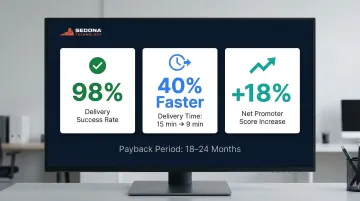
Together, labor savings, faster service, and higher guest scores make the financial case — payback within two years is achievable for most full-service properties.
How to Choose the Right Hotel Delivery Robot Supplier for Your Property
Match Robot Capability to Property Type and Size
A boutique 60-room hotel has fundamentally different needs than a 400-room convention hotel. Consider:
Property Layout:
- Corridor width and clearance for robot passage alongside guests and carts
- Elevator infrastructure and compatibility with robot APIs
- Number of floors and distance between service areas and guest rooms
- Wi-Fi coverage strength and consistency throughout the building
Service Volume:
- Average daily delivery requests across all departments
- Peak demand periods (breakfast, dinner, checkout times)
- Types of items most frequently delivered
Prioritize suppliers willing to grow with your operation and assess your specific layout, elevator infrastructure, and service volume before recommending a model. Properties with standardized elevators (Otis, KONE), high room counts, long corridors, and wide passageways achieve the strongest ROI.
Evaluate Supplier Industry Experience and Deployment Track Record
Prioritize vendors with documented hotel deployments, not just warehouse or hospital use cases. Request:
- References from similar property types (boutique, mid-scale, resort, convention)
- Case studies showing measurable outcomes (labor hours saved, delivery times, guest satisfaction scores)
- Regional or local support presence for responsive maintenance and troubleshooting
Suppliers with established hospitality track records understand the particular demands of guest-facing environments, including noise considerations, aesthetic integration, and guest interaction protocols.
Assess Flexibility in Acquisition and Support Terms
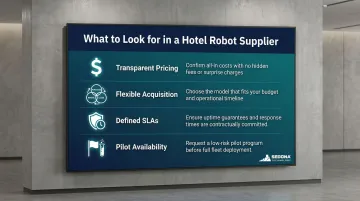
The best supplier relationships cover four key areas: pricing transparency, acquisition flexibility, service agreements, and pilot opportunities. Before signing anything, confirm the supplier addresses each one.
Look for:
- Transparent pricing — clear breakdowns of hardware, software, integration, and support costs with no hidden fees for elevator integration or PMS connectivity
- Flexible acquisition — choice of purchase, rental, or lease to match your capital structure, with short minimum rental periods (2–3 months) for low-risk evaluation
- Defined SLAs — stated response times for maintenance, remote diagnostics to minimize downtime, and a clear software update schedule
- Pilot availability — option to test the robot in your specific environment with performance benchmarking to validate ROI assumptions before full commitment
Sedona Technology offers 2-month minimum rentals with free installation, training, and ongoing support — a structure designed for hotels that want to validate performance before committing to a purchase or long-term lease.
Frequently Asked Questions
How much does the hotel delivery robot cost?
Purchase prices typically range from $15,000 to $40,000 per unit depending on payload capacity and features. Rental options provide more flexibility, with monthly costs ranging from $300 to $800, making the technology accessible for properties wanting to test before committing to purchase.
Are delivery robots profitable?
Delivery robots typically cut labor costs 20–40% and increase delivery speed by up to 40%, with payback periods averaging 18–24 months. Profitability depends on deployment scale, property size, and utilization rate — larger properties with high delivery volumes see faster returns.
What is the most popular hotel delivery robot?
Savioke's Relay robot is one of the most widely recognized in North America, with documented deployments across Marriott, Hilton, and Holiday Inn Express properties. Keenon and Pudu robots are also gaining rapid adoption globally, particularly in Asia-Pacific markets where penetration exceeds 35%.
Can hotel delivery robots operate without staff supervision?
Modern hotel delivery robots handle autonomous navigation, elevator use, and room-arrival notifications independently. Staff are still needed to load items, enter destination room numbers, and resolve exceptions like blocked corridors or unresponsive guests.
How long does it take to implement a hotel delivery robot?
Installation and onboarding range from a few days to several weeks depending on layout complexity, elevator integration, and staff training. Single-floor deployments go live within days; multi-floor implementations with full PMS integration can take 3–6 months.
Which hotel brands currently use delivery robots?
Well-known adopters include Marriott (Aloft Cupertino, Aloft Silicon Valley), Hilton (Embassy Suites LAX North, Hilton McLean Virginia), Crowne Plaza (San Jose-Silicon Valley), and YOTEL (New York Times Square). These brands have publicly documented deployments demonstrating the technology's viability across different property types and service models.