Introduction
Robot waiters are now a fixture in restaurants, hotels, and food courts across the globe. The hospitality robot sector sold over 42,000 units in 2024 alone, and the robot waiter market is projected to surge from $638.7 million in 2024 to $3.7 billion by 2030—a 33.8% annual growth rate.
Most operators have seen these machines glide across dining rooms—but the technology behind them is less obvious. What sensors guide them? How does a task actually move from kitchen to table? And which types of operations benefit most? This guide answers all three: the mechanics, the practical benefits, and where robot waiters genuinely fit.
Key Takeaways
- A robot waiter is an autonomous mobile robot built for food delivery, dish retrieval, and guest guidance in food service settings
- Navigation relies on LiDAR sensors, cameras, and SLAM mapping software to move safely through dynamic restaurant spaces
- Robot waiters handle repetitive physical tasks, not complex guest interactions, freeing staff for higher-value service and hospitality
- Adoption is strongest in Japan, South Korea, and China, with rapid growth in North America and Europe
- Flexible acquisition includes purchase, rental (from $369/month), and leasing with installation and training included
What Is a Robot Waiter?
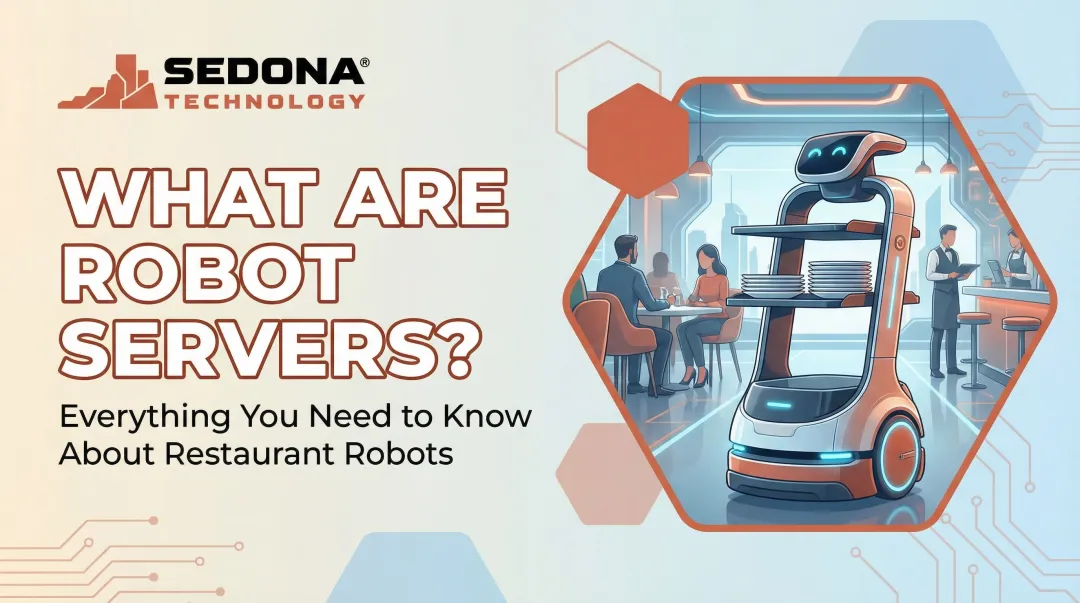
Walk into a busy restaurant and you might see one gliding between tables, tray loaded, navigating the dining room without bumping a chair. A robot waiter is an autonomous service robot built for food delivery, dish retrieval, and guest-facing tasks in hospitality environments. Unlike industrial robots operating out of sight, these machines work the floor—alongside your staff.
The labor crisis driving adoption is real. The U.S. restaurant industry remains 204,000 jobs below pre-pandemic levels, and 47% of operators report openings that are hard to fill. Limited-service hourly turnover hit 135% in late 2024, and replacing a single frontline employee costs an average of $5,864 in recruiting, training, and lost productivity. Robot waiters take over the most repetitive, physically demanding tasks—running food, bussing tables—so human staff can focus on guests.
That said, these robots have clear limits. They cannot take orders, resolve complaints, or handle nuanced guest interactions. They work as an operational support layer, not a replacement for hospitality staff who bring judgment and emotional intelligence to the floor.
Early skepticism has faded as the technology matured. Improved navigation accuracy, battery life of 10-15 hours, multi-tray capacity up to 40 kg, and POS integration have made robot waiters practically viable—well past novelty stage.
Types of Robot Waiters
Robot waiters fall into three main categories, each optimized for a different part of the service cycle:
| Type | Primary Function | Key Capabilities |
|---|---|---|
| Food delivery robots | Carry trays from kitchen to table | Load stability, route optimization |
| Greeting/guiding robots | Escort guests and provide wayfinding | Voice interaction, facial recognition |
| Busboy robots | Clear dishes and return them to kitchen | Retrieval efficiency, multi-stop routing |
Some models combine functions. For example, Sedona Technology's KEENON DINERBOT T10 handles food delivery while displaying promotional content and engaging customers through interactive voice and display systems, making it suitable for both service and marketing tasks.
The core working mechanism is similar across types—autonomous navigation, task assignment, and return—but task programming, tray configuration, and interaction modules differ based on the robot's primary function.
How Does a Robot Waiter Work?
A robot waiter completes its function through a defined operational cycle: activation, navigation, task execution, and return. Each stage relies on a different layer of hardware and software working together.
Activation and Task Assignment
A robot waiter receives its task through integration with the restaurant's POS or kitchen display system, or via manual input on a touchscreen panel. When an order is ready, the robot is assigned a table destination automatically or by staff.
Activation can be:
- Triggered automatically when the POS marks an order as ready (fully automated models)
- Initiated by staff loading the tray and confirming dispatch on the touchscreen (semi-manual models)
The setup that works best depends on the model and the restaurant's existing systems. Either way, once dispatched, the robot handles the rest on its own.
Navigation and Obstacle Avoidance
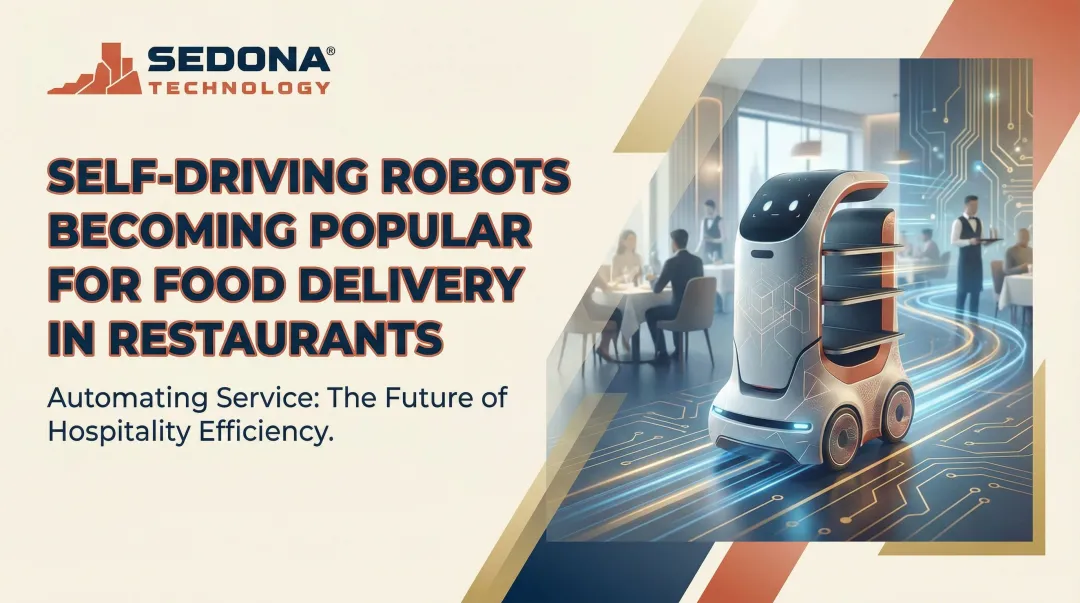
The core navigation technology in most robot waiters uses LiDAR (Light Detection and Ranging) sensors combined with cameras and SLAM (Simultaneous Localization and Mapping) to build and continuously update a real-time map of the restaurant floor.
How it works:
- The robot uses this map to plan the most efficient route to a table
- It dynamically adjusts when it detects obstacles—people walking by, chairs pulled out, or objects left in the aisle
Different models handle this differently under real-world conditions:
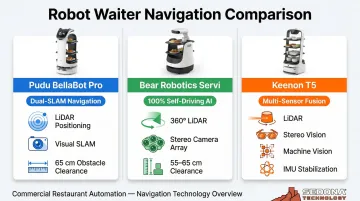
- Pudu BellaBot Pro uses dual-SLAM (Visual SLAM + LiDAR SLAM) for precise positioning, requiring a minimum path clearance of 65 cm
- Bear Robotics' Servi runs on 100% self-driving technology with LiDAR and multiple cameras, navigating spaces as narrow as 55–65 cm
- Keenon's T5 applies multi-sensor fusion combining LiDAR, stereo vision, machine vision, and an inertial measurement unit for omnidirectional obstacle avoidance
During initial setup, the robot is walked through the space to create its baseline map. Tables and zones are labeled so it can interpret instructions like "Table 7" as a specific coordinate in the floor plan.
Task Execution and Guest Interaction
When the robot reaches the destination, it stops at the assigned table, announces arrival (typically through a speaker and display screen), and waits for the guest to retrieve their food. Some models include a light indicator or animation to draw attention.
Basic interaction capabilities include:
- Touch inputs (e.g., "I've taken my food" confirmation)
- Pre-recorded messages and arrival announcements
- Display screens showing menu information or promotional content
- Voice recognition to answer simple questions (advanced models only)
For example, Sedona Technology's KEENON DINERBOT T10 features an interactive voice and display system, allowing it to communicate verbally with guests during food delivery and promotional interactions.
Return and Readiness
After task completion, the robot navigates back to its home position or a designated wait zone autonomously. For busboy robots, the return trip includes carrying retrieved dishes to the dish return point near the kitchen. Between deliveries, the robot stays ready for the next assignment and can handle multiple table runs in sequence.
Proprietary scheduling software — such as Pudu Scheduler or Bear's Multi-Robot Mode — lets multiple units communicate over the same Wi-Fi network, preventing bottlenecks in narrow aisles. Most robots run for 10–12 hours on a single charge and automatically return to their docking station when battery levels drop.
Benefits and Limitations of Robot Waiters
Efficiency and Productivity Gains
Robot waiters take over repetitive delivery and retrieval tasks, freeing human staff to focus on order-taking, upselling, and handling guest needs. At Front Porch Senior Living, 58% of servers spent more quality time with guests after robot deployment, and overtime dropped from $13,800 to $7,145 month-over-month. Japan's Skylark Group reported shorter service times during peak lunch hours and decreased employee walking distances after deploying 3,000 BellaBots.
Cost Considerations
While the upfront purchase price is significant, robot waiters operate continuously without wages, benefits, or turnover costs. Pricing has become more transparent:
- Bear Robotics Servi: $14,995 purchase or ~$999/month RaaS
- Pudu BellaBot: $15,900 purchase or ~$333/month financing
- Keenon T5: $16,500–$17,500 purchase or ~$388/month lease
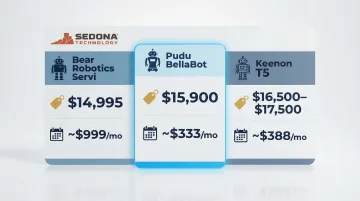
Rental and leasing options now make entry more affordable for smaller operations. For example, Sedona Technology offers rental rates starting at $369/month with a 2-month minimum, including free installation, training, and ongoing support.
Hygiene and Consistency
Robots don't call in sick, don't cross-contaminate from handling cash to food, and follow the same route and delivery protocol every time. This consistency is especially valuable for venues with high sanitation standards, such as hospitals, senior living facilities, and corporate cafeterias.
Key Limitations
That said, robot waiters aren't a fit for every operation. Key trade-offs to weigh:
- Emotional intelligence: Robots can't read dissatisfaction, handle nuanced special requests, or de-escalate service issues — which is why they work best alongside human staff, not as replacements.
- Floor plan requirements: Most units need a flat, structured layout. Stairs, narrow aisles, outdoor patios, and unpredictable foot traffic all create obstacles.
- Proven deployment risks: Chili's paused a 61-store pilot in 2022–2023 after robots moved too slowly, obstructed human servers, and failed to demonstrate clear ROI — a real fit consideration for any operator evaluating deployment.
Where Are Robot Waiters Used?
Robot waiters perform best in large-footprint dining rooms with clear aisle spacing and high-volume operations. Ideal environments include:
- Hot pot restaurants: Haidilao (China/Global) uses Pudu BellaBot for high-volume delivery
- Buffets and food halls: Au Tour du Monde (France) deployed multiple BellaBot Pro units in a 2,500-square-meter buffet, achieving a 20% increase in sales for highlighted dishes
- Fast-casual chains: Chick-fil-A is testing, while Chili's paused a 61-store rollout
- Hotels: Shangri-La Traders Hotel (China) uses Keenon T-Series for room service delivery and lobby guidance
- Airports and malls: Greeter/guide robots for wayfinding
- Corporate cafeterias: Compass Group (UK HQ) uses SoftBank/Keenbot for tray delivery during lunch rushes
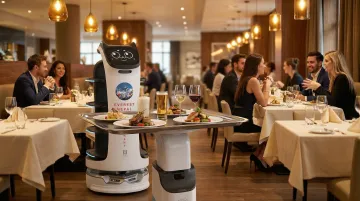
Asia leads in mass deployments. Pizza Hut runs robot servers in 1,000 China locations, Pudu Robotics reports 120,000 cumulative global shipments, and Japan's Skylark Group alone deployed 3,000 BellaBots.
The United States and Europe are moving more cautiously, scaling through pilot programs that require clear ROI validation before chain-wide rollouts.
Businesses evaluating a first deployment should assess floor plan suitability, POS integration compatibility, and staff readiness. Acquisition options that include installation, training, and ongoing support — whether rental, lease, or purchase — lower the barrier to getting started. Sedona Technology offers all three models for exactly this reason.
Conclusion
Robot waiters are not a replacement for skilled hospitality staff. They are a precision tool for specific, repeatable tasks that drain staff time and energy. Understanding how they work clarifies exactly where they add value—reducing physical strain, increasing table turns, and controlling labor costs—and where human judgment remains irreplaceable.
That clarity translates directly into smarter integration decisions. Operators who understand the limits and strengths of these systems avoid costly missteps and get faster results. For businesses ready to move forward, Sedona Technology offers flexible ways to get started:
- Rental from $369/month (minimum 2-month term)
- Leasing through a trusted partner with low upfront costs
- Free installation and training included with all options
To discuss how robot waiters can fit your operation, contact Sedona Technology at +1 602-687-3253 or submit an inquiry online.
Frequently Asked Questions
What is a robot waiter?
A robot waiter is an autonomous mobile robot used in food service environments to deliver food, retrieve dishes, and guide guests. These robots navigate restaurant floors independently using sensors and mapping technology.
In which country are robots working as waiters?
Robot waiters are most widely used in Japan, South Korea, and China, where large-scale restaurant chains have deployed them extensively. Restaurants in the United States and Europe are also adopting them rapidly, particularly in fast-casual and buffet-style dining.
Can a robot waiter take orders from customers?
Most current robot waiters cannot take orders—they are designed for delivery, retrieval, and guidance tasks. Order-taking still requires human staff or a separate self-service kiosk or tablet system integrated with the POS.
How do robot waiters navigate around people and obstacles?
Robot waiters use LiDAR sensors and SLAM technology to build a real-time map of the space, detecting and rerouting around obstacles like chairs, people, or dropped objects without interrupting service.
How much does a robot waiter cost?
Purchase prices typically range from $14,995 to $17,500. Rental and leasing options are available through many suppliers, with rates starting at $369/month, making adoption accessible without a large upfront investment.
Can robot waiters fully replace human servers?
Robot waiters cannot fully replace human servers because they lack emotional intelligence, cannot handle complex or unexpected guest situations, and are limited to structured, programmable tasks. They are most effective as a support tool that works alongside human staff.