This guide covers what warehouse robotics is, the main types of robots, their key benefits, real-world use cases, cost considerations, and emerging trends shaping the future of warehouse automation.
Key Takeaways
- Warehouse robots automate picking, sorting, transporting, and storing with minimal human intervention
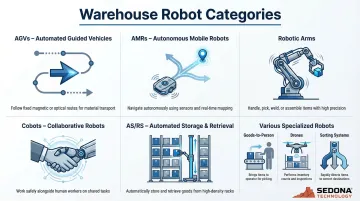
- Main categories include AGVs, AMRs, cobots, robotic arms, AS/RS systems, and aerial drones
- Benefits include reduced labor costs, higher throughput, fewer injuries, and 24/7 operation
- Flexible options like rental, leasing, and Robotics as a Service (RaaS) make adoption accessible even for smaller operations
- Most deployments deliver measurable ROI within 1–3 years through labor savings and throughput gains
What Is Warehouse Robotics?
Warehouse robotics refers to the deployment of automated machines and robotic systems inside warehouse and fulfillment center operations. These systems handle tasks that are repetitive, physically demanding, or require high speed and precision—with minimal human intervention.
Modern warehouse robots combine two critical components: specialized hardware designed for specific tasks (transport, picking, storage) and intelligent software that controls navigation, coordination, and task execution. This software typically integrates with Warehouse Management Systems (WMS) to synchronize robot activity with inventory data and order flows.
That integration marks a sharp departure from how warehouses operated even a decade ago.
How Modern Robots Differ from Traditional Automation
Traditional warehouse automation relied on fixed infrastructure—conveyor belts, static forklifts, and manual processes. Today's robots use AI, computer vision, and sensors like LiDAR to:
- Navigate dynamically around obstacles
- Adapt to changing warehouse layouts
- Handle a wider variety of tasks
- Make real-time decisions without human input
The result: warehouses can absorb demand spikes and reconfigure workflows without tearing out and rebuilding fixed infrastructure.
Types of Warehouse Robots
Warehouse robots are specialists—each category is optimized for a specific function. Most operations deploy a combination of types to create a fully automated workflow.
Mobile and Transport Robots
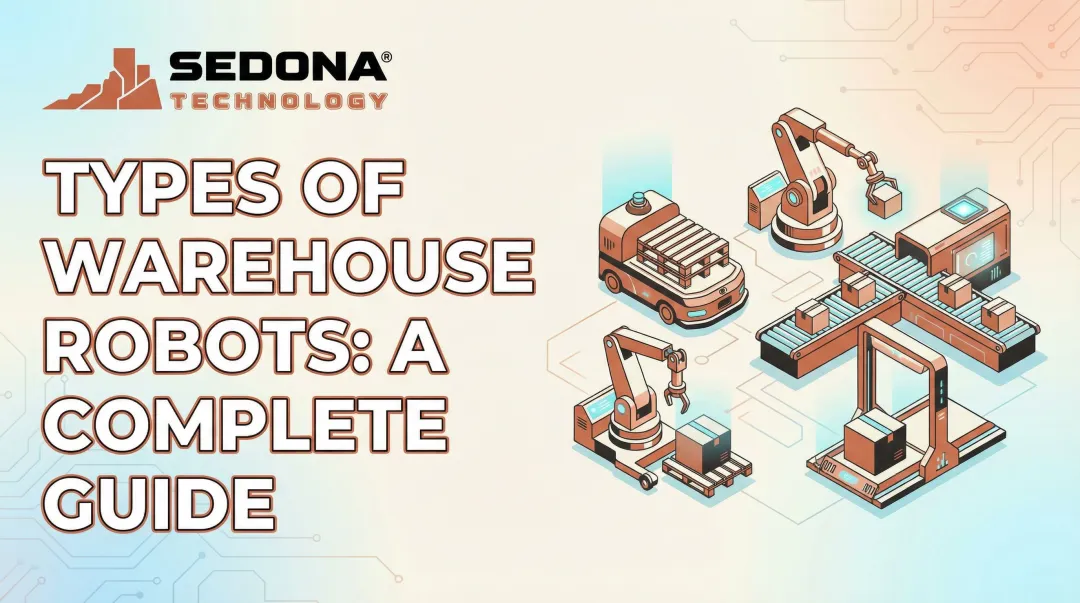
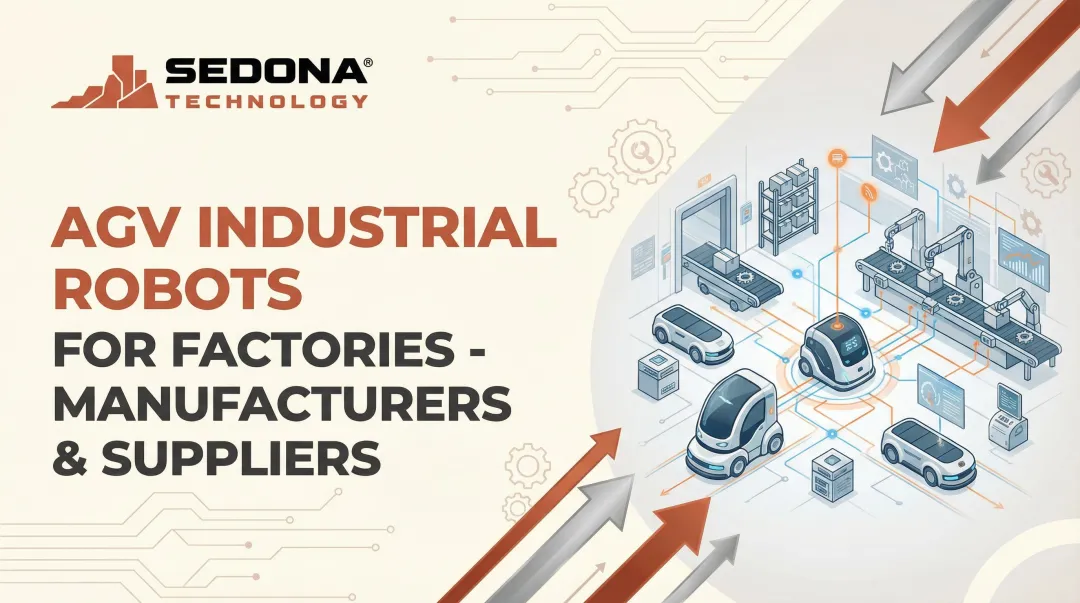
Automated Guided Vehicles (AGVs) follow pre-mapped routes using floor-embedded markers, magnetic tape, or laser guidance. They move goods along predictable paths across the warehouse, making them ideal for high-volume transport flows in stable environments. AGVs rely on basic sensors for collision avoidance, stopping when obstacles are detected rather than navigating around them.
Autonomous Mobile Robots (AMRs) represent the next generation of warehouse transport. Using onboard sensors—LiDAR, 3D cameras, and SLAM (Simultaneous Localization and Mapping)—AMRs navigate dynamically without fixed paths, rerouting around obstacles in real time. This flexibility makes them more efficient than AGVs in busy, changing environments where layouts shift frequently.
For heavy-duty transport specifically, purpose-built AMRs like the KEENON S100 (available through Sedona Technology) handle high-load autonomous movement with real-time coordination across warehouse and factory floors—supporting continuous workflows without fixed routing infrastructure.
Picking, Packing, and Collaborative Robots
Articulated robotic arms—either fixed or mobile—handle picking items from shelves, packing boxes, palletizing, and unloading containers. Their programmability allows them to handle delicate items with precision while maintaining consistent speed across shifts.
Collaborative robots (cobots) work alongside human employees rather than replacing them. They follow pickers through the warehouse, handling physical lifting or packing while humans focus on judgment-based tasks. Built-in safety sensors allow cobots to operate near people without protective barriers.
Storage, Retrieval, and Specialty Robots
Automated Storage and Retrieval Systems (AS/RS) move on fixed tracks through aisles to retrieve or store inventory from high-density shelving. These systems maximize vertical space utilization and reduce human travel time, enabling facilities to store more in the same footprint.
Beyond AS/RS, several specialized robot types address specific operational gaps:
- Goods-to-Person (G2P) systems bring inventory to stationary pickers, eliminating walk time
- Aerial drones scan inventory in high racks for cycle counts
- Sorting robots use computer vision to route items at high speed based on destination
Key Benefits of Warehouse Robotics
Increased Throughput and Productivity
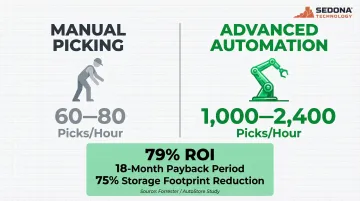
Robots operate continuously across multiple shifts without fatigue, maintaining consistent speed and accuracy throughout. McKinsey reports that advanced automation systems can handle between 1,000 and 2,400 picks per hour, compared to a typical manual rate of 60–80 picks per hour.
A Forrester study found that a composite e-commerce organization using AutoStore achieved a 79% ROI with an 18-month payback period, along with a 75% reduction in storage footprint.
Improved Worker Safety
Robots handle hazardous tasks that put workers at risk—heavy lifting, high-rack retrieval, and operations in extreme-temperature environments. A 2025 study found robotic fulfillment centers experienced a 40% decrease in severe injuries compared to traditional warehouses.
That said, non-severe repetitive strain injuries increased as workers shifted to different roles—a reminder that safety gains depend on how automation is implemented, not just deployed.
Cost Savings Over Time
Robots reduce labor costs, cut costly errors, and free up facility space—the upfront investment is offset by measurable long-term returns. The ROI calculation should account for:
- Reduced labor costs for repetitive tasks
- Lower error rates and fewer returns
- Decreased training costs and turnover
- Optimized facility space usage
Space efficiency, in particular, compounds these savings in ways that extend well beyond labor costs alone.
Optimized Space Utilization
AS/RS and other high-density systems allow warehouses to retrieve inventory from areas humans can't safely access. By using vertical space efficiently, facilities store more in the same footprint—reducing real estate costs and improving inventory accessibility.
Scalability During Demand Peaks
Robot fleets scale up during high-demand periods without the lead time required for hiring and training staff. During peak shopping seasons, robots simply operate longer hours or additional units are deployed temporarily—providing flexibility that manual operations cannot match.
Warehouse Robotics Use Cases Across Industries
E-commerce and Retail Fulfillment
AMRs and G2P systems dramatically shorten order cycle times in high-SKU environments. Leading e-commerce operators have deployed six-figure robot fleets to handle same-day and next-day delivery commitments. Amazon operates over 1 million robots globally, with its DeepFleet AI system reducing robot travel time by 10%.
DHL Supply Chain surpassed 500 million picks using Locus Robotics AMRs, demonstrating the scale at which warehouse robotics now operate in retail fulfillment networks.
Manufacturing and Industrial Facilities
Robotic arms and cobots are well-suited for the repetitive, physically demanding tasks that wear down human workers. Multipurpose mobile manipulators like the KUKA KMR iisy CR combine transport and picking in a single unit, improving material flow across production lines.
Common manufacturing applications include:
- Assembly-line material delivery and component kitting
- End-of-line palletizing to reduce ergonomic strain
- Continuous transport between production zones without downtime
Food and Beverage, Pharma, and Specialty Sectors
Robots designed for temperature-controlled or cleanroom environments handle perishable goods or precision-sensitive pharmaceutical products with consistency and traceability that manual labor cannot consistently maintain across thousands of daily picks.
A few deployments show what this looks like in practice:
- AutoStore robots handle SK Pharma's temperature-sensitive medications — 40 ambient units plus 3 chilled robots running continuously at +5°C
- Swisslog PowerStore AS/RS achieves 12-minute turn times at Lineage Logistics' -20°F deep-freeze facilities
- Symbotic AS/RS is now active across 42 of Walmart's regional distribution centers, automating core supply chain operations
Warehouse Robotics Costs and Acquisition Options
Understanding Cost Ranges
Warehouse robotics costs vary widely based on technology type and deployment scale:
- Entry-level AMRs: $10,000–$100,000 for basic transport robots
- Heavy-duty AMRs: $100,000–$150,000 for high-payload units
- Full AS/RS systems: Millions of dollars for complete high-density storage installations
These sticker prices tell only part of the story. The right cost comparison must include labor savings, injury reduction, error elimination, and space optimization over a 5-7 year lifecycle.
Total Cost of Ownership Beyond Purchase Price
Beyond hardware, several cost categories routinely catch buyers off guard:
- Installation and infrastructure preparation (Wi-Fi upgrades, floor repairs)
- Software integration with existing WMS systems
- Staff training and change management
- Ongoing maintenance contracts
- Electricity and operational expenses
Operations that skip total cost of ownership planning often find these factors add 30–50% to the initial hardware cost over the system's lifetime.
Robotics as a Service (RaaS)
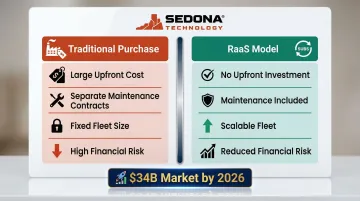
RaaS mirrors SaaS pricing models, replacing large capital expenditures with regular operational payments that bundle hardware, maintenance, and support. ABI Research projects the RaaS installed base will reach 1.3 million units generating nearly $34 billion in revenue by 2026.
RaaS advantages:
- Eliminates upfront capital investment
- Includes maintenance and support in monthly fee
- Allows dynamic fleet scaling based on demand
- Reduces financial risk for mid-sized operations
Flexible Acquisition Through Sedona Technology
For warehouses and industrial facilities looking to adopt robotics without the burden of full purchase costs, Sedona Technology offers sales, rental (with a minimum 2-month period), and leasing options through a trusted partner.
All arrangements include:
- Free installation
- Comprehensive staff training
- Ongoing support
With no hidden ramp-up fees and a rental entry point as low as two months, facilities can pilot automation at realistic scale before committing to a larger deployment.
Key Trends in Warehouse Robotics
AI and Predictive Analytics Integration
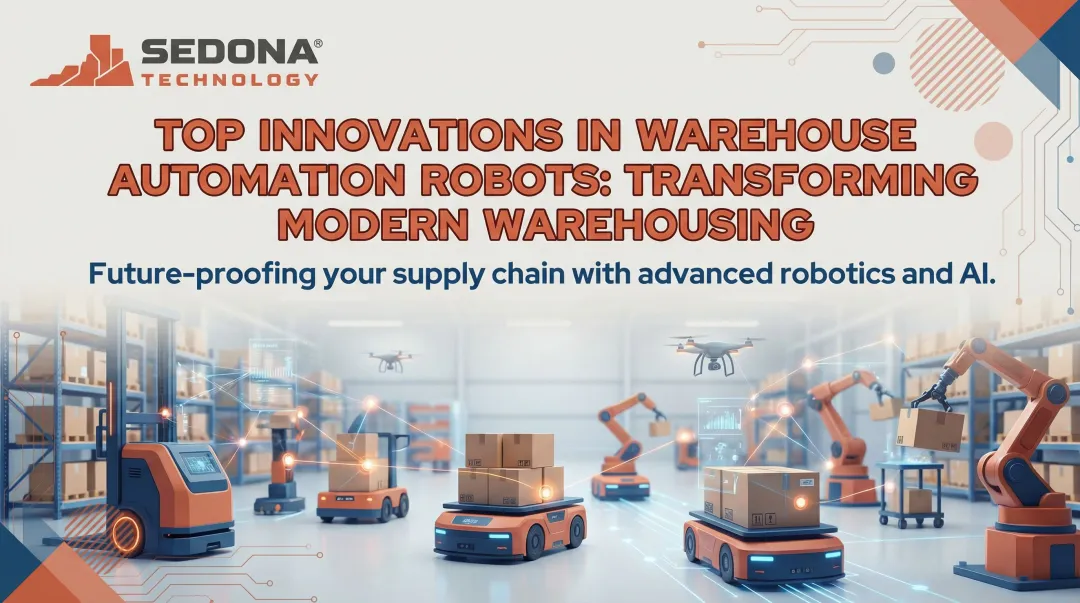
Warehouse robots increasingly pair with AI systems that anticipate demand, reroute robots in real time, and flag maintenance needs before failures occur. Amazon's DeepFleet generative AI model acts as an intelligent traffic management system, predicting congestion and optimizing routes across its million-robot network—improving fleet travel efficiency by 10%. Multi-agent orchestration platforms like GreyOrange's GreyMatter extend this further, coordinating mixed fleets from multiple vendors based on real-time order patterns and resource availability.
Human-Robot Collaboration and Workforce Evolution
The trend is moving away from full replacement toward augmentation—robots handling physical monotony while workers shift to oversight, exception management, and higher-skill roles.
Workforce transformation indicators:
- Amazon reports upskilling over 700,000 employees since 2019 to work alongside advanced technologies
- Highly automated fulfillment centers require 30% more employees in reliability, maintenance, and engineering roles
- Multipurpose robots capable of performing several tasks with a single unit are entering production, combining transport and manipulation capabilities
Multipurpose mobile manipulators—like the MiR MC600 (combining the MiR600 AMR base with Universal Robots' UR20/UR30 cobot arms)—demonstrate this evolution, handling both autonomous navigation and dexterous manipulation tasks. For warehouses and factories evaluating automation, these converging capabilities mean fewer specialized units are needed to cover the same range of operations.
Frequently Asked Questions
How are robots used in warehouses?
Robots handle transporting goods between locations, picking and packing orders, sorting items by destination, managing inventory via scanning, and storing or retrieving products in high-density systems—often with little to no human involvement on the floor.
What are warehouse robots called?
Common names include AGVs (Automated Guided Vehicles), AMRs (Autonomous Mobile Robots), cobots (collaborative robots), AS/RS (Automated Storage and Retrieval Systems), robotic arms, and G2P (goods-to-person) systems.
How much does a robotic warehouse cost?
Costs vary widely—from around $10,000 for entry-level units to millions for full-facility systems. Rental, leasing, and RaaS models reduce that upfront burden considerably, with some deployments starting well under $1,000 per month.
What is the difference between an AGV and an AMR?
AGVs follow fixed, pre-programmed routes using rails, wires, or magnetic tape, while AMRs use onboard sensors and AI to navigate dynamically around obstacles. AMRs are more flexible and better suited to environments where layouts or workflows change frequently.
Can small or mid-sized warehouses benefit from robotics?
Yes—especially with modular systems, entry-level AMRs, and rental/RaaS models that eliminate large upfront costs. Businesses can start with a pilot using one or two robots before scaling once they've validated the fit for their operation.