Introduction
Picture this: You check into a hotel, and instead of a bellhop, a sleek robot greets you at the entrance, loads your luggage onto its platform, calls the elevator, and delivers your bags directly to your room—no tipping required, no awkward small talk. This isn't a scene from a sci-fi movie anymore.
Butler bots are already deployed in hotels, restaurants, offices, and commercial spaces, changing how businesses think about service and staffing. Fully autonomous humanoid robots that fold laundry and cook dinner remain years away—but specialized service robots are working 24/7 right now, delivering room service, running food, and transporting supplies with real efficiency.
This post unpacks what butler bots are, how they actually work, where they're deployed today, and what's coming next for service robotics.
Key Takeaways
- Butler bots are autonomous service robots designed for delivery, greeting, and household tasks—distinct from industrial manufacturing robots
- Most commercial butler bots use LiDAR, computer vision, and AI to navigate safely around people and obstacles
- Hotels and restaurants lead adoption—typical deployments see 18-24 month payback periods and measurable lifts in guest satisfaction scores
- Consumer humanoid models like 1X NEO ($20,000) still rely heavily on remote human operators for complex tasks
- Fully autonomous home butler bots capable of everyday tasks aren't expected to hit accessible price points until 2027-2028 at the earliest
What Is a Butler Bot?
A butler bot is an autonomous or semi-autonomous robot designed to assist humans with service-oriented tasks—fetching items, greeting guests, delivering food, or managing household routines. Unlike industrial robots built for manufacturing assembly lines, butler bots are specifically engineered to interact safely with people in dynamic, unpredictable environments like hotel lobbies, restaurant dining rooms, and home living spaces.
The term "butler" evokes the image of a personal servant who anticipates needs and provides attentive service. Modern robot butlers aim to replicate this attentiveness through AI-driven responsiveness. They're programmed to recognize patterns, learn routes, and adapt to changing conditions—going well beyond fixed, scripted routines.
The Butler Bot Spectrum
Butler bots exist on a wide spectrum of sophistication:
- Simple wheeled delivery robots used in hotels and restaurants (like Pudu's BellaBot or Keenon's BUTLERBOT W3)
- Mid-tier service robots with advanced navigation and multi-room capabilities
- Full-body humanoid prototypes like 1X's NEO, designed to navigate complex home environments and manipulate objects
In practice, most commercial deployments sit toward the simpler end of this spectrum. These robots excel at repetitive, predictable tasks like delivering room service or transporting supplies. Full humanoid models capable of handling diverse household chores remain in pilot phases—held back primarily by the high cost of hardware and the dexterity challenges involved in manipulating everyday objects.
How Butler Bots Work: AI, Sensors, and Navigation
Core Technology Stack
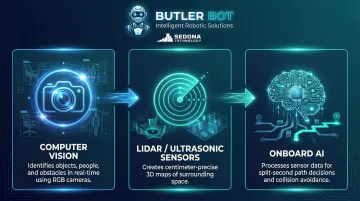
Butler bots combine multiple technologies to navigate safely and complete tasks:
- Computer vision uses RGB cameras to identify objects, people, and obstacles in real-time
- LiDAR or ultrasonic sensors create detailed 3D maps of spaces, measuring distances to walls, furniture, and moving objects with centimeter-level precision
- Onboard AI processes all this sensor data to make split-second navigation decisions, choosing optimal paths and avoiding collisions
The cost of LiDAR sensors has plummeted by 99% over the past decade to roughly $500 per unit, making advanced 3D navigation economically viable for commercial robots. This dramatic price drop has directly enabled the mass deployment of butler bots in hotels and restaurants.
Recent path optimization algorithms have improved door-passage success rates — a highly collision-prone scenario — by over 30% in hospital ward simulations, demonstrating rapid progress in obstacle-avoidance accuracy.
Machine Learning and Continuous Improvement
Butler bots aren't static — they learn from repeated interactions and environmental data. Each delivery run generates annotated video and sensor data that feeds back into training navigation models. Over time, robots improve their route efficiency, learn shortcuts, and handle edge cases more gracefully.
Platforms like NVIDIA's Isaac Lab use simulation environments to train robots through reinforcement learning and imitation learning. Policies developed in these virtual worlds are then transferred to real-world robots through a process called sim-to-real, enabling reliable performance on tasks like obstacle avoidance and object manipulation from day one of deployment.
Human-Machine Interaction Layer
Users interact with butler bots through multiple channels:
- Voice recognition allows natural language commands ("Deliver this to room 305")
- Touch interfaces on built-in screens provide visual menus and status updates
- App-based commands let users schedule deliveries or summon robots remotely
- Facial recognition enables personalization (e.g., remembering a hotel guest's room number or preferences)
The Autonomy vs. Remote-Operation Divide
Not all "autonomous" butler bots operate independently. While some commercial models navigate fully autonomously within mapped spaces, others — particularly humanoid home robots like 1X's NEO — currently require scheduled sessions with remote human operators to complete complex tasks. This gap between marketed capability and operational reality is a key factor for hotels, restaurants, and facilities managers to evaluate before deployment.
Connectivity Requirements
Most butler bots depend on stable Wi-Fi or LTE connectivity to:
- Communicate with cloud-based AI systems for complex decision-making
- Receive software updates and new capabilities
- Be monitored or overridden by operators during unexpected situations
This connectivity dependence is a key consideration for any deployment environment — facilities with poor Wi-Fi coverage or security restrictions may face operational challenges.
Real-World Butler Bot Examples Today
1X NEO: The $20,000 Humanoid with a Catch
The 1X NEO is a 66-pound bipedal humanoid robot designed for home use, priced at $20,000 for early access or $499/month via subscription. It's marketed as capable of handling household chores autonomously, but there's a significant limitation: at launch, NEO requires owners to schedule sessions with remote human operators to complete complex or unfamiliar tasks.
During these "Expert Mode" sessions, a remote worker takes control of the robot via VR headset to complete the chore and gather training data. This means your $20,000 robot is essentially a telepresence device for offshore labor—a reality that highlights how far the technology still has to mature before achieving true autonomy.
Prosper Robotics' Alfie
London-based Prosper Robotics is developing "Alfie," a wheeled domestic robot with two arms and modular attachments, expected to cost around $15,000 (or £400/month to rent). Alfie is currently in prototype stage, with R&D and manufacturing ties to Shenzhen, China, one of the world's largest robotics hardware manufacturing centers.
Like NEO, Alfie uses a human-in-the-loop teleoperation model — early versions are expected to handle only 20% of tasks autonomously.
Hospitality-Focused Service Robots
Commercial service robots are far more prevalent and proven than consumer humanoid models:
Leading manufacturers:
- Keenon Robotics: The BUTLERBOT W3 and DINERBOT series are deployed in over 100,000 units globally, with 44.8% share of catering delivery robot exports
- Pudu Robotics: BellaBot and FlashBot models have 120,000+ units shipped globally, with 3,000 BellaBots deployed at Japan's Skylark Group alone
- Aethon: TUG robots are deployed in 140+ hospitals, logging 50,000 deliveries per week
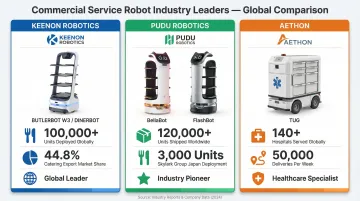
These wheeled robots handle room service delivery, supply transport, and patient tray delivery with impressive reliability and ROI.
Humanoid vs. Functional: A Critical Distinction
The two main robot categories serve very different purposes:
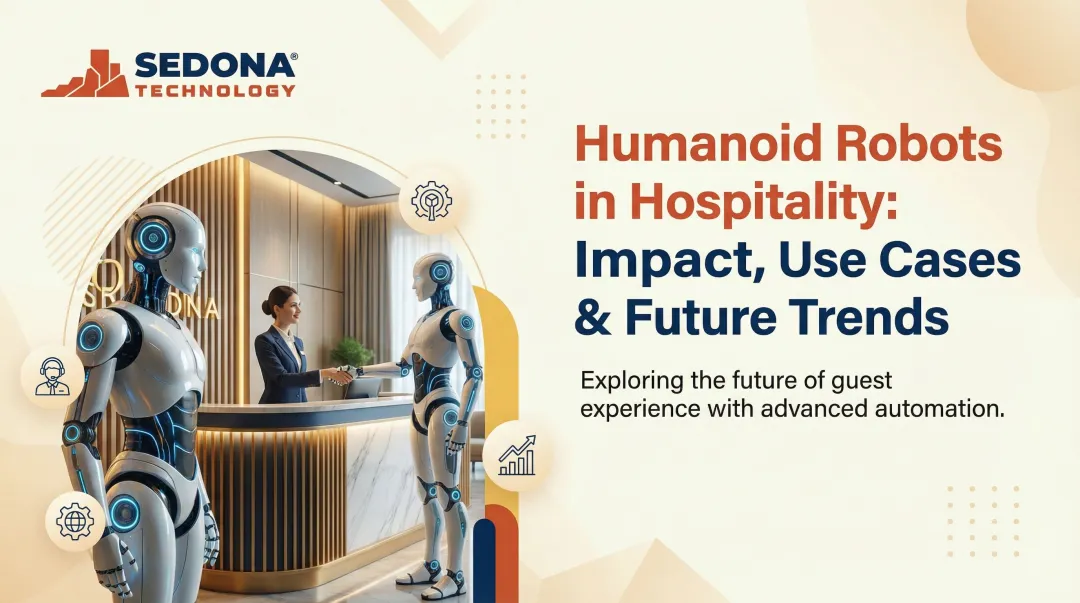
- Humanoid designs mimic human appearance and movement, which theoretically lets them use tools and furniture built for people — but they're expensive, mechanically complex, and still largely in pilot phases
- Functional service robots are built purely for efficiency in defined tasks, which is why they dominate commercial deployments: cheaper, more reliable, and unburdened by human-like movement requirements
Amazon Astro: The Consumer Bridge
Amazon's Astro (priced at ~$1,600) represents where the consumer market currently sits. It functions as a mobile Alexa smart display and roaming security camera, but lacks manipulative arms and cannot navigate stairs—severely limiting its utility as a true "butler." Without the ability to handle objects or move between floors, mobility alone doesn't get a robot very far.
Commercial Applications: Hotels, Restaurants, and Beyond
Hotels: Proven ROI and Guest Experience Enhancement
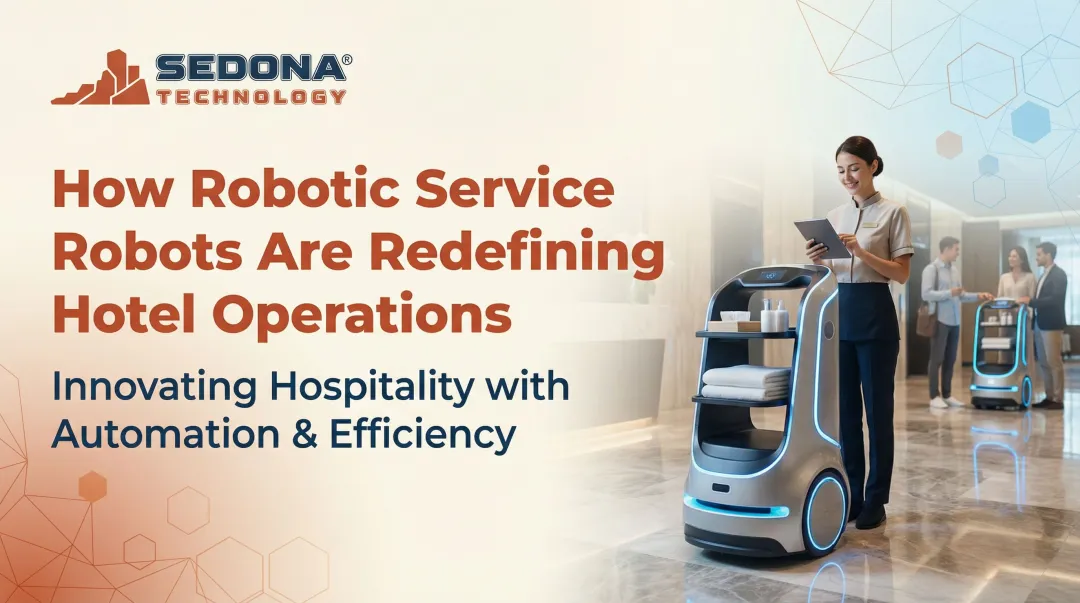
Butler bots in hotels handle multiple scenarios:
- Check-in assistance: Greeting guests and providing wayfinding
- Luggage transport: Moving bags from lobby to rooms
- Room service delivery: Delivering food, amenities, and guest requests
- Concierge information: Answering basic questions via touchscreen
- Housekeeping supply runs: Transporting linens, toiletries, and cleaning supplies
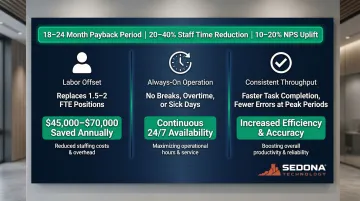
These deployments deliver an 18-24 month payback period, reducing staff time on repetitive tasks by 20-40% and enabling 24/7 service availability. Research shows 10-20% uplift in Net Promoter Scores (NPS) linked to consistent, contactless robot interactions.
Restaurants and Food Service
Butler bots serve as food runners and table-side delivery units, transporting plates from kitchen to table with precision. They don't replace servers—instead, they handle repetitive delivery tasks so staff can focus on hospitality, order-taking, and guest interaction. This reduces server workload, minimizes delivery errors, and enables faster table turnover during peak hours.
Offices, Malls, and Airports
Emerging use cases include:
- Offices: Mail and document delivery between departments
- Malls: Wayfinding assistance and promotional displays
- Airports: Passenger assistance, wayfinding, and luggage transport
High-foot-traffic environments with defined routes are ideal for butler bot deployment. In 2025, Dubai Airports deployed 30 autonomous cleaning robots across five major locations, while Changi Airport introduced ceiling-crawling inspection bots and a unified robotic middleware framework.
The Business Case
Primary ROI drivers include:
- Labor offset: Each unit replaces 1.5-2 FTE positions, saving $45,000-$70,000 annually
- Always-on operation: No breaks, overtime, or sick days — robots run continuously
- Consistent throughput: Faster task completion with fewer errors during peak periods
These savings make the business case clear, but upfront purchase isn't the only path in. Rental and leasing models let businesses test deployment before committing capital. Sedona Technology LLC, for instance, offers sales, rental (starting at $575/month for the KEENON BUTLERBOT W3), and leasing options, with free installation, training, and ongoing support included — so hotels, restaurants, and offices can get started without a large initial outlay.
Butler Bots and Home Automation
Integration with Smart Home Ecosystems
Butler bots intersect naturally with existing smart home platforms. They can integrate with Amazon Alexa, Google Home, or Apple HomeKit to:
- Receive voice commands from anywhere in the home
- Trigger routines (e.g., "Goodnight" mode dims lights and sends the robot on a security patrol)
- Coordinate with smart locks, lights, and appliances
This makes butler bots the physical execution layer on top of existing smart home infrastructure — carrying out the actions that voice assistants can only schedule or request.
Realistic Near-Term Home Use Cases
Beyond the marketing headlines, near-term home applications currently include:
- Fetching items from another room (remotes, medications, phones)
- Reminding residents of medications or appointments
- Greeting visitors at the door
- Patrolling the home for security monitoring
These capabilities contrast sharply with the more ambitious humanoid visions (cooking meals, doing laundry, organizing clutter) that remain years away from mass-market feasibility.
The Cost and Practicality Gap
Most capable home butler bots currently cost $15,000–$25,000 and require:
- Structured, uncluttered environments to navigate reliably
- Stable Wi-Fi connectivity throughout the home
- Regular software updates and maintenance
- User tolerance for occasional failures and limitations
This makes them a niche product today, primarily for tech enthusiasts and early adopters. Prices are expected to drop as hardware scales and manufacturing volumes increase. Industry forecasts point to sub-$10,000 fully autonomous home humanoids becoming viable somewhere in the 2028–2030 window, though timelines depend heavily on how quickly manufacturing scales.
Challenges, Costs, and What the Future Holds
Key Technical Bottlenecks
Dexterous manipulation remains the hardest unsolved challenge. Picking up and handling irregular household objects—a crumpled towel, a fragile wine glass, a tangled charging cable—is extraordinarily difficult for robots. Physics engines struggle to model contact dynamics, deformable objects, and high-resolution tactile feedback, creating a significant sim-to-real gap where policies trained in simulation fail in the real world.
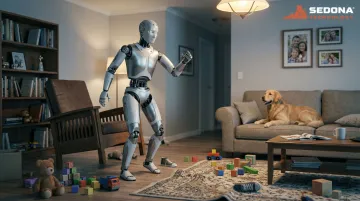
Understanding unstructured environments is another hurdle. Homes and public spaces are unpredictable—furniture moves, lighting changes, pets wander, and children leave toys scattered. While navigation is largely solved in controlled environments, handling truly dynamic, cluttered spaces remains challenging.
Latency issues in remote-operation models create frustrating delays. When a robot needs human intervention, waiting for a remote operator to connect, assess the situation, and take control can take minutes—undermining the efficiency gains that justify the robot's cost.
Cost, Privacy, and Data Concerns
Butler bots gather significant amounts of video, audio, and behavioral data to function. The 1X NEO streams live indoor video to remote operators, creating severe GDPR and FTC compliance hazards regarding data minimization and third-party consent. Legal analysts warn that getting valid consent from household members who didn't sign the contract — children, guests, housekeepers — is nearly impossible.
Businesses and homeowners should evaluate data policies carefully before adopting any butler robot, looking for:
- Hardware-level privacy shutters for cameras
- Localized processing that doesn't require cloud connectivity
- Strict opt-in protocols for data sharing
- Transparent disclosure of who has access to video/audio feeds
The 5-10 Year Outlook
The convergence of several technologies will accelerate butler bot capabilities:
- Smarter LLMs will make robots far better at understanding natural instructions and multi-step tasks
- Falling LiDAR hardware costs will bring high-quality 3D mapping to lower price tiers
- Tactile sensors and compliant hand designs will gradually close the dexterity gap for everyday object handling
The market numbers reflect this momentum. Grand View Research forecasts the market will reach $107.75 billion by 2030 (12.4% CAGR), while Allied Market Research projects $293.08 billion by 2032 (24.3% CAGR). This growth is driven by acute labor shortages in hospitality, healthcare, and logistics, alongside rapid integration of AI and IoT.
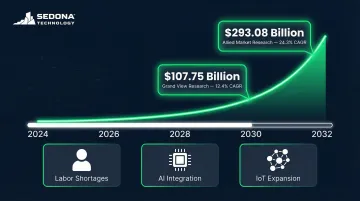
Those numbers point to a future that looks less like one omnipotent humanoid butler and more like orchestrated fleets of specialized robots—each doing what it does best. The Shangri-La Traders Hotel in Shanghai pioneered this approach, pairing Keenon's XMAN-R1 humanoid greeter with specialized wheeled robots for luggage transport and room service delivery—using the humanoid's social appeal for guest interaction while relying on wheeled robots for the heavy logistics work.
Frequently Asked Questions
What is a butler robot?
A butler robot is an autonomous or semi-autonomous machine designed to perform service tasks for humans—such as delivering items, greeting guests, or assisting with household routines—using AI, sensors, and navigation software to operate safely in human environments.
How far away are robot butlers?
Basic service butler robots are already deployed commercially in hotels and restaurants today, handling delivery and transport tasks reliably. Fully autonomous humanoid butler bots capable of handling complex home tasks like laundry and cooking are still 3-5 years away from being affordable and reliable enough for mainstream use.
What tasks can a butler robot perform?
Current butler robots handle food and drink delivery, luggage transport, item fetching, guest greeting, and security monitoring reliably. Task capability varies by model—wheeled commercial robots are proven for delivery, while humanoid models still struggle with fine manipulation tasks.
How much does a butler robot cost?
Commercial hospitality robots range from a few thousand to tens of thousands of dollars depending on capability, with rental options starting around $575/month for businesses that want to avoid large upfront costs. Humanoid models—such as 1X's NEO ($20,000) and Prosper's Alfie ($15,000)—remain a higher-end category aimed at more complex environments.
Are butler robots safe to use around people?
Most commercial butler bots include obstacle detection, speed limiters, and emergency stop functions, and operators test them regularly in high-traffic environments like hospitals and hotels. Human supervision is still recommended during initial deployment to ensure smooth integration with existing workflows.
Can butler robots work in hotels and restaurants?
Yes—hotels and restaurants are currently among the most active adopters of butler bots globally. Wheeled service robots handle room delivery, food running, and supply transport with proven ROI and reliability. These environments benefit most because routes are predictable, tasks are repetitive, and the business case for labor savings is clear.